
Finding Residents Across New Haven
New Haven County is a group of 27 municipalities, not a current county records office. A name in New Haven, Waterbury, Milford, or Branford must be routed to the town that maintains the record. The first useful question is what the search is meant to establish. An assessor card can point to a current owner and parcel. A voter lookup can confirm a current registration status in a town. A deed can show recorded transfer parties. A directory, newspaper, probate file, or vital record may connect a person to an older address or relationship. The Connecticut town-and-borough statute and the SOTS county population reference provide the broader geographic frame.
That distinction keeps a residents directory honest. An owner is not automatically an occupant. A mailing address is not the same as a situs address. A former address is not a current location. A public summary is not a certified copy. For a bounded search, write down the municipality, name spelling, known year, address type, and the question that the record should answer.
- Identify the town or city before opening a local clerk, assessor, or registrar portal.
- Search the municipal assessor or GIS system by address, owner, account, MBLU, or PID when the parcel is known.
- Use the Connecticut voter lookup or local registrar for a current town and name check, while allowing for privacy suppression.
- Search the town clerk's deed or map index when a recorded transfer, lien, mortgage, or legal description matters.
- Move to the library, State Library, newspaper, directory, probate, or vital-record route for an older household or family link.
When an online result is missing, the next step is not a wider guess. Ask the actual custodian for an existing record, date range, nonexempt fields, format, fee estimate, and certification requirement under Connecticut's Freedom of Information Act when that law applies.
Where New Haven Keeps Resident Records
The phrase New Haven County can send a searcher to the wrong desk. Connecticut abolished county government in 1960, so there is no county recorder, county assessor, county clerk, county elections office, or county jail roster. Each town or city clerk records local instruments and filings. Each municipality has its own assessor and registrar. State systems fill the gaps across town lines: the Judicial Branch handles public court searches, DPH handles a statewide vital-copy channel, SOTS maintains a centralized voter system, and Probate uses districts rather than a county clerk.
New Haven City Clerk
200 Orange Street, Room 202
New Haven, CT 06510
203-946-8339
New Haven Assessor
165 Church Street
New Haven, CT 06510
203-946-4800
New Haven Registrars
Hall of Records, 200 Orange Street #201
New Haven, CT
203-946-8035
The New Haven City Clerk page is a local anchor, but it is not a county substitute. The City Clerk forms and fees page should be checked for the current copy and certification route. For another municipality, use the Secretary of the State's town clerk and registrar directory to route the request.
New Haven Starts With Town Clerks
New Haven's clerk records deeds, mortgages, releases, quitclaims, liens, maps, trade names, notary records, election filings, local minutes, and other municipal material. The city's SearchIQS route advertises guest access to an index and images, while the clerk remains the office for certification. The practical land-record range is about 1951 or 1952 to the present, with a conflicting start date in the vendor material. Maps reach back to 1835. Trade-name coverage has its own index and image periods.
Other county towns use their own clerks and may use RecordHub or another vendor. The vendor, start year, image access, and copy rules vary. A New Haven result should not be described as a countywide deed result, and a town's absence from one vendor does not mean its records do not exist. A specific book, page, instrument, party, street, or legal description is a better request than a demand for every resident.
Connecticut's Freedom of Information Act, CGS §§1-200 through 1-242, is an access route for existing nonexempt records. It does not require a clerk to build a new list of every resident. A precise request names the municipality, record category, address or parcel, date span, desired format, and certification need. Written denials generally have a four-business-day rule, while fees and exemptions depend on the record and agency.
Note: A county label helps with orientation, but the municipal custodian controls the record, copy, fee, and certification path.
New Haven Parcel Owner Search
A current New Haven parcel search starts with the municipal assessor, not a county roll. The VGSI search screen accepts a query with Address, Owner, Acct#, MBLU, PID, or All modes. MBLU can be split into map, block, and lot fields. The result is reference data, not legal title. Check the situs, mailing field, parcel ID, assessment date, sale history, legal description, and exemptions as separate pieces.
| VGSI control | How it helps |
|---|---|
| Address | Finds a current situs record when the street and number are known. |
| Owner | Locates an owner name, but does not establish who occupies the parcel. |
| Acct# | Uses the municipal account identifier for a more exact return. |
| MBLU | Separates map, block, and lot components for parcel routing. |
| PID | Uses the parcel identifier that can bridge map and assessor data. |
| All | Searches the New Haven municipal system across its available modes. |
The VGSI page describes an October 1 assessment date, a 2021 revaluation context, and assessment at 70% of fair market value. The assessor page and portal show different mill-rate references for different years, so preserve the date rather than treating a rate as permanent. OPM and regional parcel data add a broader GIS layer, but local accuracy and field completeness vary.
Note: A mailing address may belong to an out-of-town owner, trust, company, or representative and should never be relabeled as a household address.
Current New Haven Resident Sources
Current records answer different questions, so the strongest residents directory is a coverage map rather than a single list. Each source has a keeper, a date range, and a limit. New Haven's assessor is local. The voter system is statewide but town based. Courts and Probate cross municipalities, while a license or business filing usually points to a professional or entity connection rather than a home.
| Source | What It Lists | Keeper | Access |
|---|---|---|---|
| Grand List and assessor card | Owner, parcel, situs and mailing clues, assessment, exemptions, sales | Municipal assessor | Free VGSI reference and office route |
| Voter lookup | Current town registration, status, party, limited public fields | SOTS and local registrars | Free lookup, privacy limits |
| Deed and map index | Recorded transfer parties, liens, mortgages, legal descriptions | Municipal clerk | Vendor index, images, clerk copies |
| Judicial inquiry | Party, docket, property, legal-notice, and selected case details | Connecticut Judicial Branch | Free public summary, date limits |
| Credential or entity search | Professional status, business name, principal, agent, filing clues | DCP or SOTS | Free public portals, field limits |
For a single person, use the resident lookup workflow with a town and second identifier. For an address, preserve the parcel and street fields, then follow the clerk or directory trail. A commercial compiled people-search category may be broader in appearance, but it can mix names and stale addresses and does not replace a town clerk, assessor, registrar, court, library, or state program.
New Haven's local history route is NHFPL's Local History Room at Ives Library, where directories, newspapers, maps, photos, municipal documents, and an obituary request service support older research. Community Management Teams add civic context but do not publish member rolls. The absence of a public staff, school, alumni, or association roster is a source limit, not an invitation to infer one.
New Haven Voter Records, Carefully Read
The Connecticut voter lookup asks for a town, last name, first name or initial, and date of birth. The live page rejected automated inspection in the research run, so exact result labels should be checked in a normal browser. A current result can support town registration and status, but it does not prove ownership, occupancy, or an unbroken residence history. A blank result may reflect a different town, inactive or removed status, a name variation, a protected record, or a portal limitation.
Public voter data includes a narrower birth field than the lookup match requires. Public Act 26-1 §96 changed ordinary public release to year of birth, while month and day are exempt. The Voter Registry Privacy Program lets a voter swear that disclosure creates danger, and Safe at Home supplies a separate substitute-address route for qualifying people. A public-facing record should say an address is protected or not displayed, not that the person is absent.
New Haven election records also route through the City Clerk. The researched fee schedule lists $1 per page for an absentee list, exemption report, or official checklist, $5 for a financial report, $25 for a citywide list, no charge for official results, and $6 for voter-registration cards. Confirm the current schedule before ordering. The statewide CSV file is a written $300 request with restricted purposes, so it is not a casual neighborhood list.
For a visual reference, the Secretary of the State voter information route points researchers to the official lookup and town contacts.
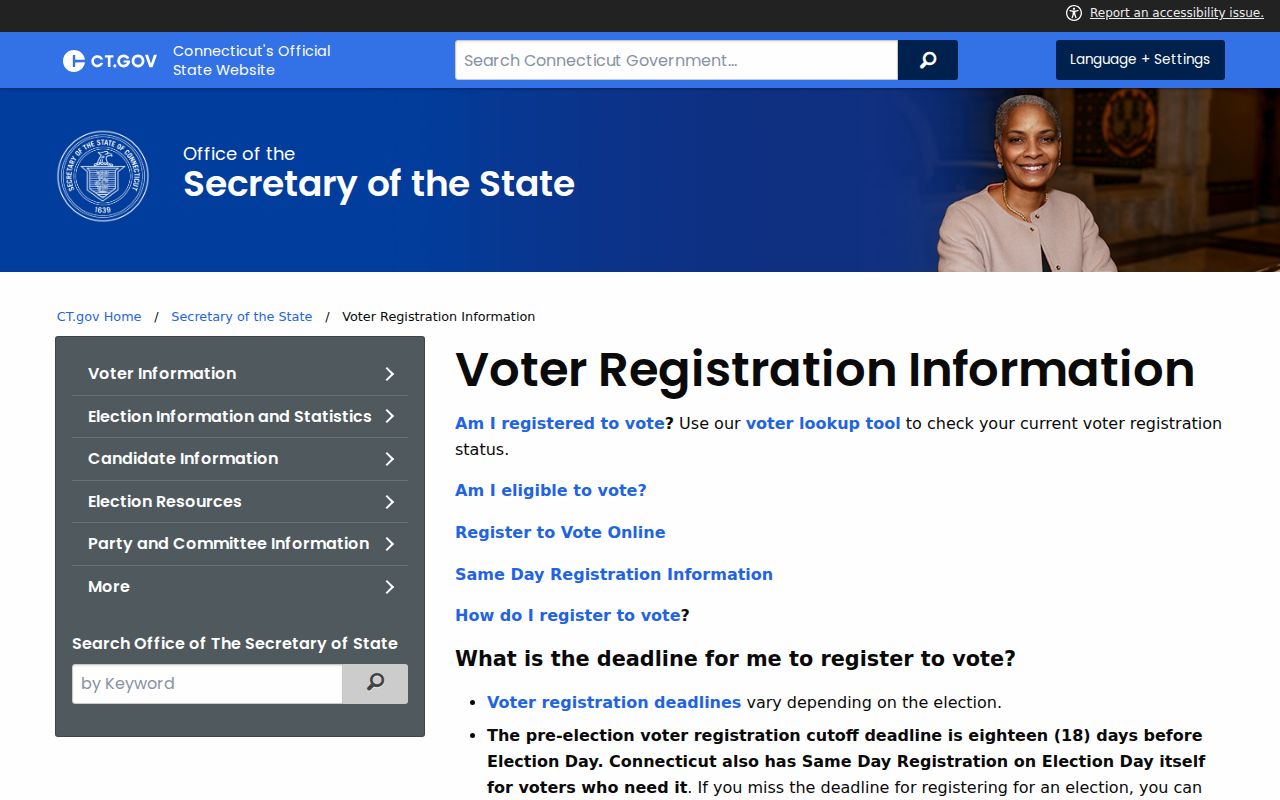
The official route makes the key boundary clear: voter status is one corroborating field, not a household roster.
New Haven Court and Probate Names
The Judicial Branch replaces the county court office that a searcher might expect. Its party inquiry can be narrowed by last name, first name, location, case category, case type, sort order, and Starts With, Contains, Is Equal To, or Sounds Like matching. New Haven, Meriden, Milford, Ansonia-Milford, and Waterbury venue codes can appear in one statewide system. A result is a public summary, not a certified file. Older or protected matters may require a courthouse computer, clerk request, or archive route.
Probate has a separate case lookup for Decedent's Estate and Trusts. Its fields include district, open or closed status, last name, and first name. Results show case number, name, type, and district, with key categories from January 5, 2011 forward and incomplete older coverage. A case number can lead to fiduciary contact information, but online documents are not generally open to everyone. Ask the district clerk about access.
The legal-notice list provides a useful sample record shape: party to be notified, case name, docket number, court location, notice start, and notice expiration. That shape can help distinguish a court lead from a residence claim. The New Haven Judicial District courthouse is at 121 Elm Street. Complete or certified material belongs with the clerk, not a summary screen.
Note: A docket joins a name to a court event, while a parcel card joins a name to an assessment record; neither alone proves residence.
Connecticut Vital Records for New Haven
Birth, marriage, civil-union, death, fetal-death, and related certificates use two main channels. The event town registrar keeps the local record, while the Department of Public Health offers statewide forms for records from July 1, 1897 forward. A New Haven request can go to the Bureau of Vital Statistics at 165 Church Street, while DPH forms provide a state route. DPH says a state request can take up to 12 weeks, so the local route may be the practical first choice when the event town is known.
Eligibility changes by record. Birth records under 100 years are restricted to eligible requesters, while records at least 100 years old are more broadly available. Anyone 18 or older may request an ordinary certified marriage or death record, but protected sections and Social Security numbers remain limited. Fetal-death, adoption, parentage, surrogacy, and related records carry their own rules under CGS §§7-51 and 7-51a.
DPH's forms request event details, requester identity, contact details, signature, relationship or eligibility, copy type, payment, and identification. Genealogy societies have broader access to old records but cannot use that route to bypass confidential adoption or parentage material. A vital record can confirm an event or relationship, but it should be dated and matched with another record before it is used to place a person at an address.
The Connecticut vital-record overview separates the town and state routes and links current forms.
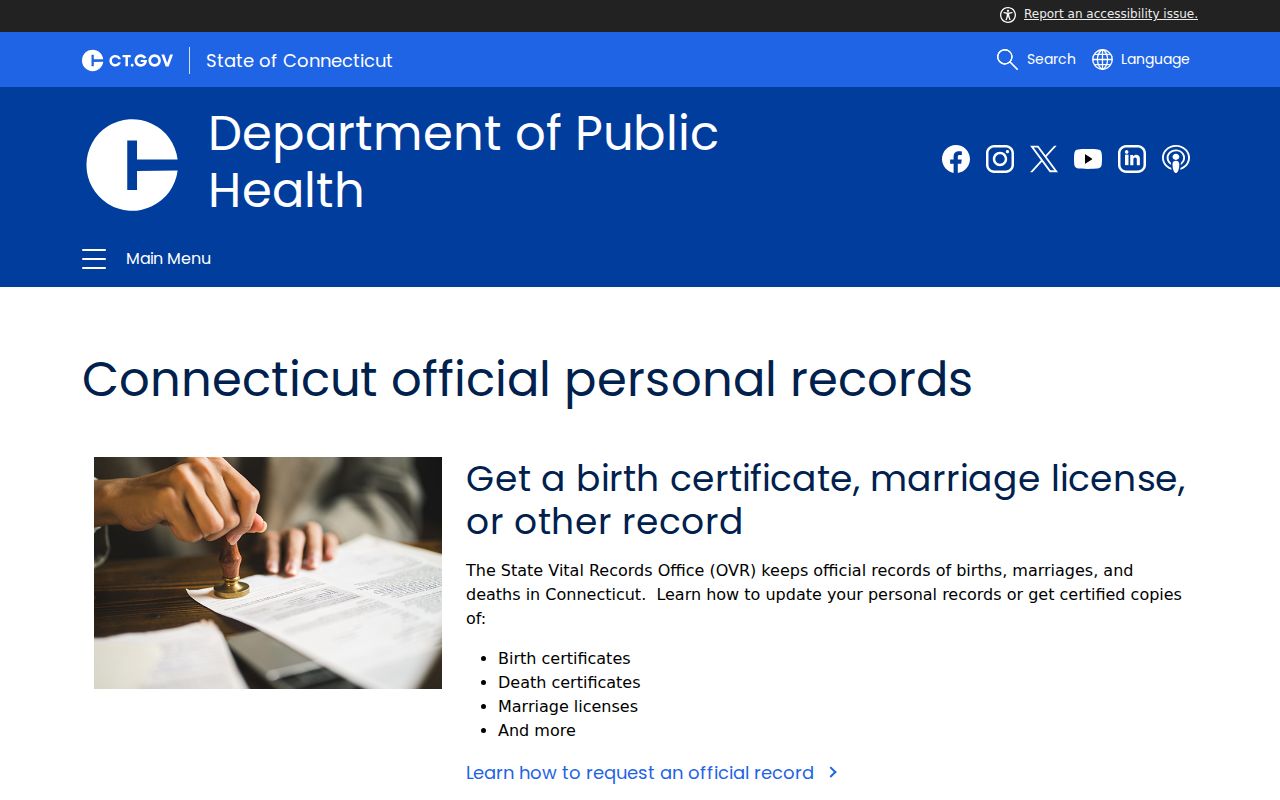
The DPH overview is a useful reminder that a certificate request is an eligibility process, not an open name search.
New Haven Credentials and Businesses
A person can appear in New Haven County records through a professional license or a business filing without the address being a home. DCP's eLicense portal accepts business name, first name, last name, address, city, state, ZIP, country, credential number, license type, subcategory, and status fields. The visible status choices include Active, Pending, and Inactive, although the full category menus were not exposed in the unattended capture. A credential address should be labeled mailing or practice information.
Business.CT.gov's SOTS registry search supports business name, ALEI, or filing number. Available results can connect an entity to principals, agents, filing dates, and annual-report PDFs. A New Haven trade name is a municipal clerk filing, so the entity search and town record should be kept separate. A business connection can help disambiguate a name, but it does not turn a commercial address into a residence claim.
For a visual reference, the Connecticut Business Registry route identifies the statewide search shell.
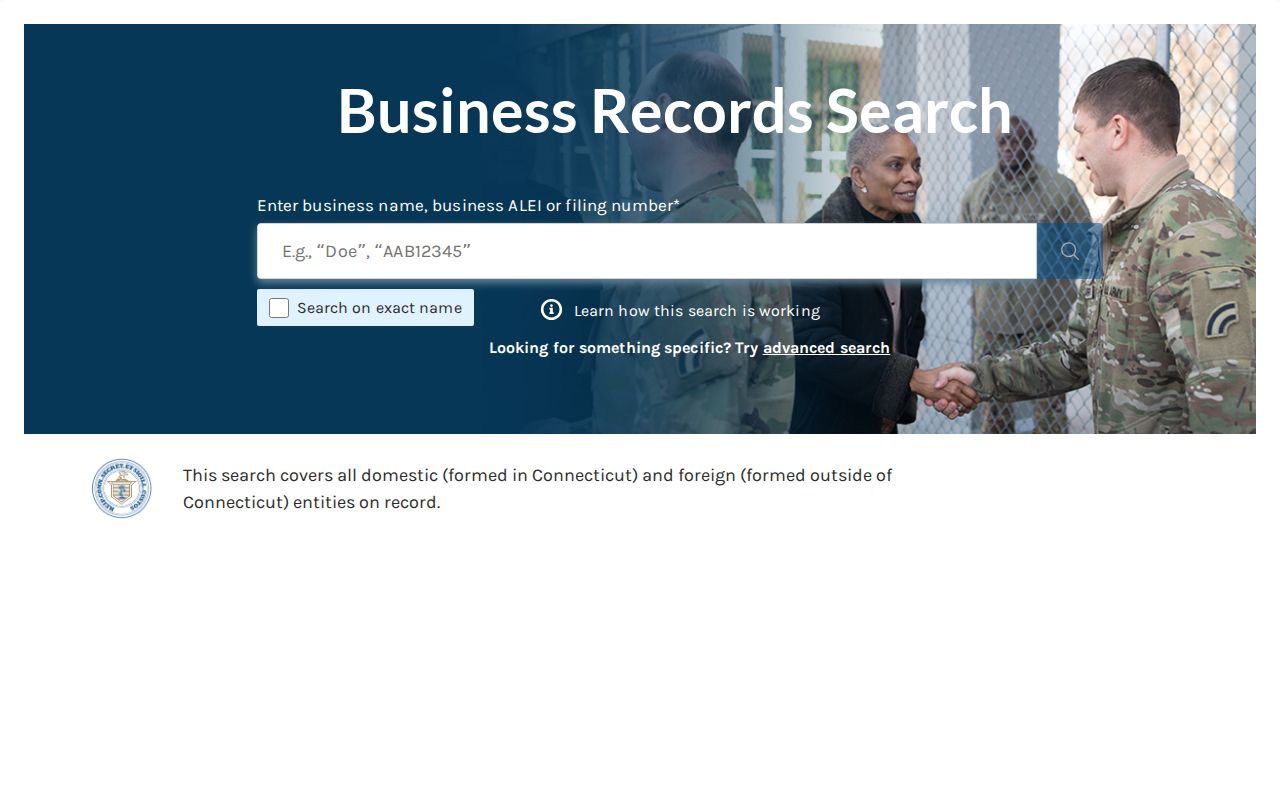
The portal's current JavaScript rendering was incomplete during capture, so a careful result should record the field actually shown rather than promise filters that were not verified.
New Haven ZIPs Are Postal Clues
ZIP codes help narrow a mail address, but they do not define New Haven County, a municipality, a parcel, or a household. The practical county-associated working set has 41 geographic ZIPs, with additional station, PO-box, unique, and special codes in the Connecticut Association of Assessing Officers material. A USPS result should preserve the returned ZIP, USPS city or post office, delivery type, municipal town, and county as separate fields.
The USPS address lookup is the right address-by-address check. USPS's City-State Product and AIS materials distinguish street, rural, PO box, general delivery, unique, military, and non-active delivery types. AIS is a paid product with monthly updates and non-exportable viewer limits. The free lookup is a research gap in the capture, so current field labels and error behavior should be read from the live USPS page.
Once the postal result is known, compare it with the municipal assessor and GIS. A Woodbridge situs can have a New Haven mailing label, and a station code can look like a land-area ZIP without being one. Postal geography is a filter for a residents directory, not a final identity field.
Note: USPS controls delivery geography, while the municipality and clerk control parcel and land-record identity.
New Haven Custody and Safety Lists
New Haven County has no county jail roster. County-jail functions were consolidated into the state correctional system in 1968, so current custody belongs with Connecticut DOC. The DOC search accepts an inmate number, last name, first name, and date of birth, with search hints and reset controls. A result may show current location, status, admission, bond, controlling offense, sentence, release estimate, parole, or detainer fields. The feed is current and updated regularly or nightly, with statutory and safety exclusions.
The Connecticut sex-offender registry is a separate public-safety source. It may show a last-known address, physical descriptors, and offense details with a clear warning that the registry is not a risk assessment and should not be used to conclude that a person is currently dangerous. A last-known address is not a current residence result. Local police records must be requested from the municipality, and no countywide incident index was located.
The Connecticut DOC inmate-search page is the official route for current custody information. The DOC locator and its management information guidance describe the current-feed boundary.
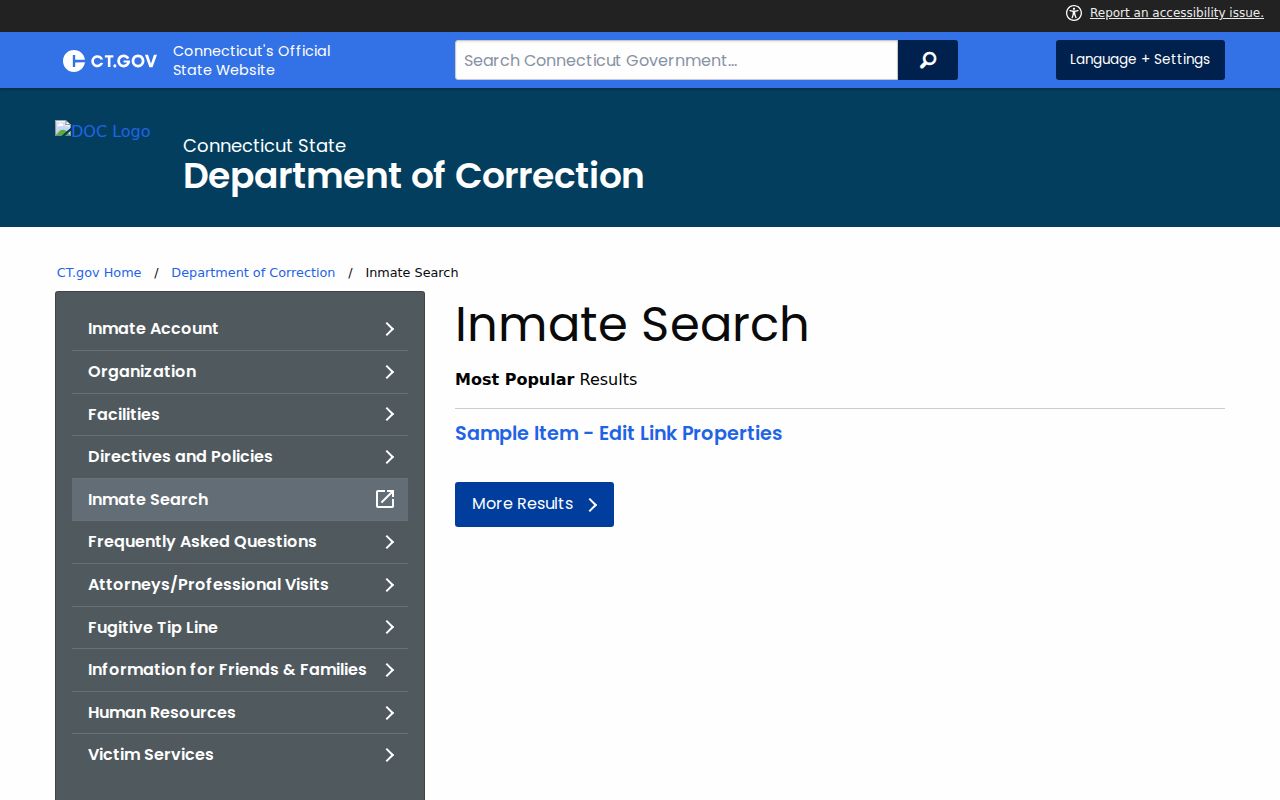
That current-only boundary prevents a custody entry from being mistaken for a residence history.
For the registry context, the Connecticut sex-offender registry landing page explains the official disclaimer.
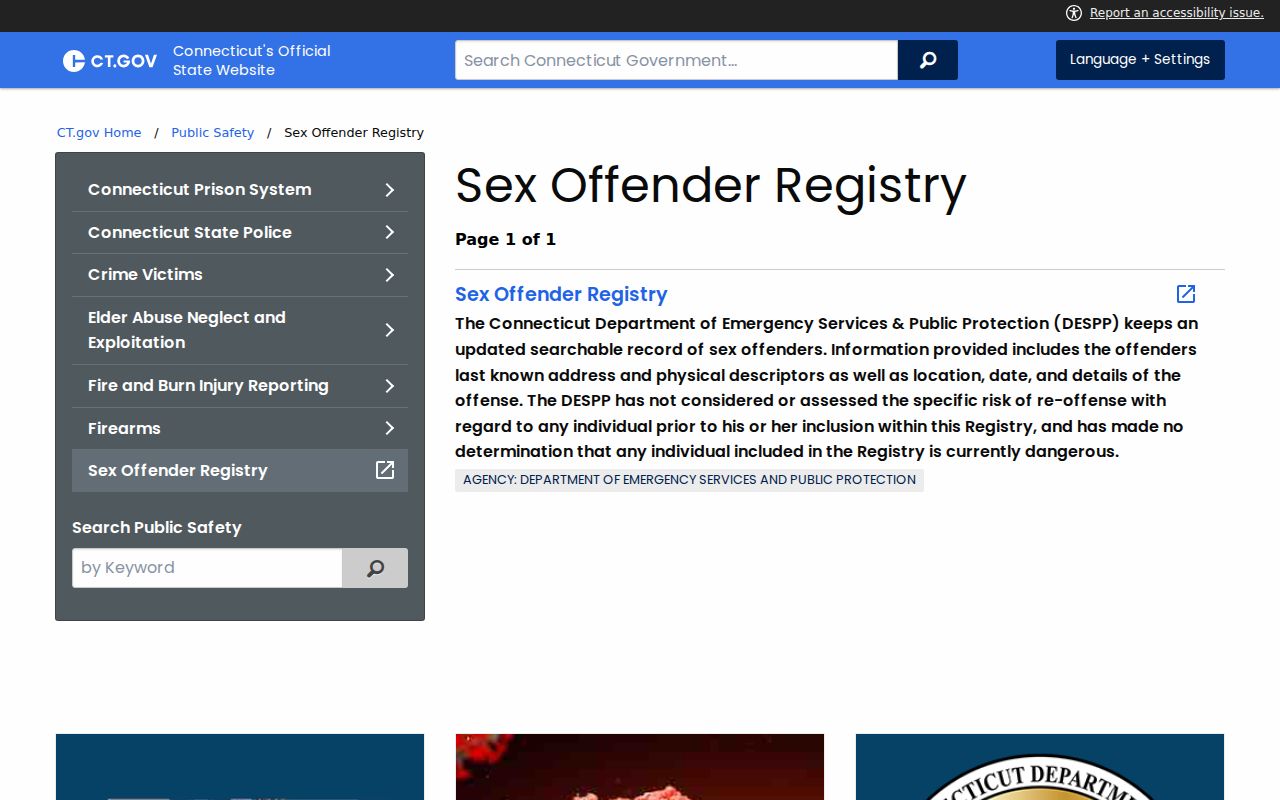
The notice is part of the record's meaning and should stay with any lawful personal research note.
New Haven Unclaimed Property Names
CTBigList is a useful state-held name and last-known-address clue, especially for an heir or family-history question. The Treasurer says businesses generally turn property over after three to five years of lost contact, and the holdings can include accounts, checks, refunds, securities, insurance proceeds, and safe-deposit contents. The search and direct claim route are free. A match means the state received property under a reported name or address. It does not show where a person lives now.
Use the official state route, verify the claimant instructions, and avoid a paid intermediary that asks for money to search or claim. A name in CTBigList can be compared with a probate case, directory, or vital record, but the dates and address types must be kept distinct.
For the source route, the Connecticut Treasurer's unclaimed-property overview directs readers to CTBigList.
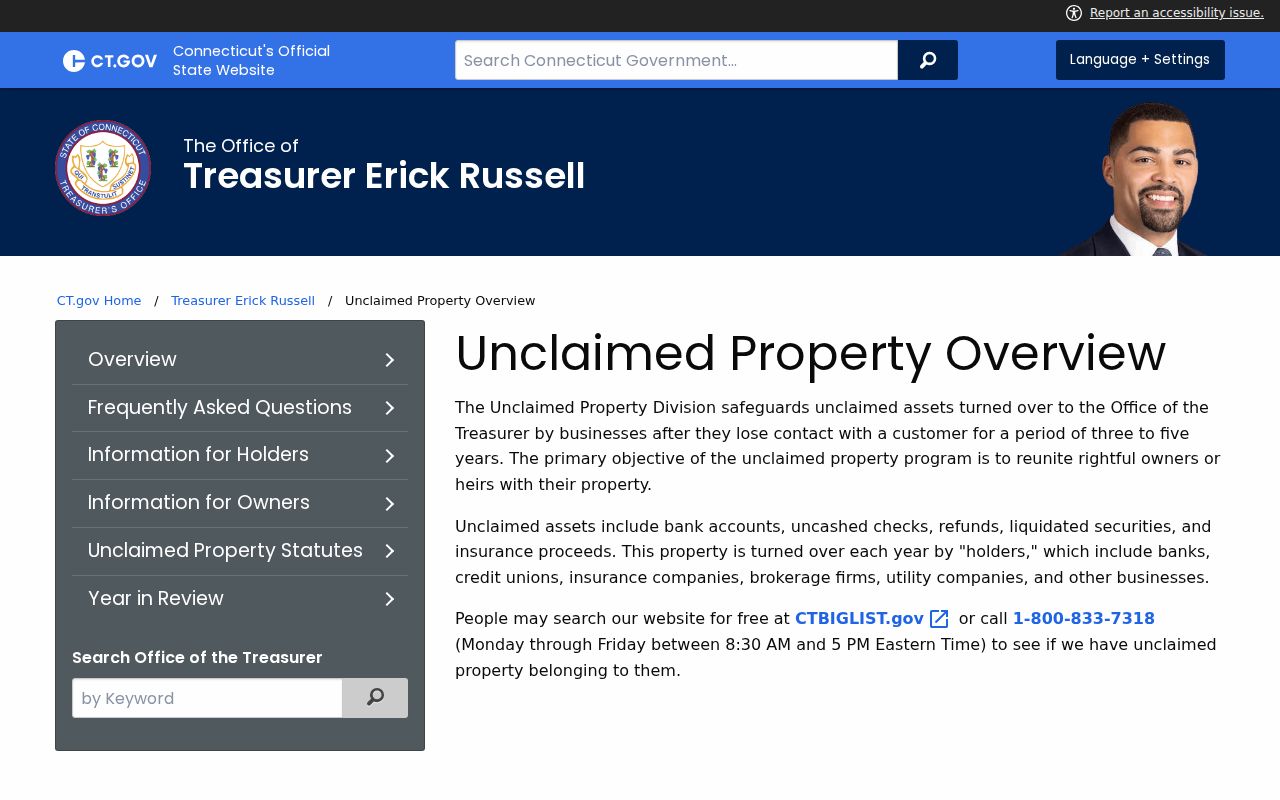
The state-held asset is a lead for reconnecting or estate research, not a current-address directory.
New Haven Historical Resident Directories
NHFPL's New Haven run is chiefly Price & Lee and spans 1840 to about 1990. Complete microforms cover 1840 through 1960, while bound books continue from the 1880s into the late twentieth century. A typical entry can name a head of household, spouse, occupation, workplace, and work address. The reverse address section begins around the 1920s and is the key tool when the search starts with a street rather than a surname.
Waterbury's Bronson Library holds a near-complete 1868 to 1990 run and selected digitized volumes. Meriden's collection runs from 1868 to 1992. The Whitney Library adds series from 1830 and 1840 through 1990 or 1993, along with city and county manuscripts, maps, newspapers, and a targeted Black New Haven Residents guide. The State Library adds county court, probate, naturalization, census, and genealogy finding aids.
The New Haven city directories and historical collections page separates the shelf work from current parcel and voter records. A directory year is a historical lead. Pair it with a newspaper, deed, map, census, probate file, or vital record before treating an entry as a confirmed household.
New Haven Records Need Two Sources
Verification is a habit, not a final flourish. Record the source, date, field type, and coverage boundary for every result. A current assessor card and a recorded deed support an ownership chain. A directory and newspaper support historical presence. A voter result and parcel card can corroborate a town connection but still do not prove occupancy. A probate result identifies a case and district, not a guaranteed current address.
- Roll
- A maintained list such as an assessment or voter record, with its own custodian and update cycle.
- Index
- A finding aid that points to a record; an index entry may not include the full image or certified copy.
- Parcel
- A mapped property unit identified by local fields such as parcel ID or MBLU, not a complete household list.
- Criss-cross directory
- A directory that supports both name-to-address and reverse address-to-name searching, often with omissions.
Lawful personal use. New Haven records are useful for family history, civic research, property curiosity, and reconnecting with people through proper channels. Do not use a public result to stalk, harass, intimidate, or harm anyone. A protected or missing field must stay missing.
The Connecticut Freedom of Information Act, municipal custodian rules, court access limits, DPH eligibility rules, Safe at Home, and the Voter Registry Privacy Program all matter to the result. When a record is sealed, protected, offline, or outside the portal's date range, report that boundary plainly. A source-dated chain with an open question is stronger than a confident profile built from weak matches.
For a fee or copy question, the Connecticut FOI copy-fee guidance explains the general state and municipal copy rules.
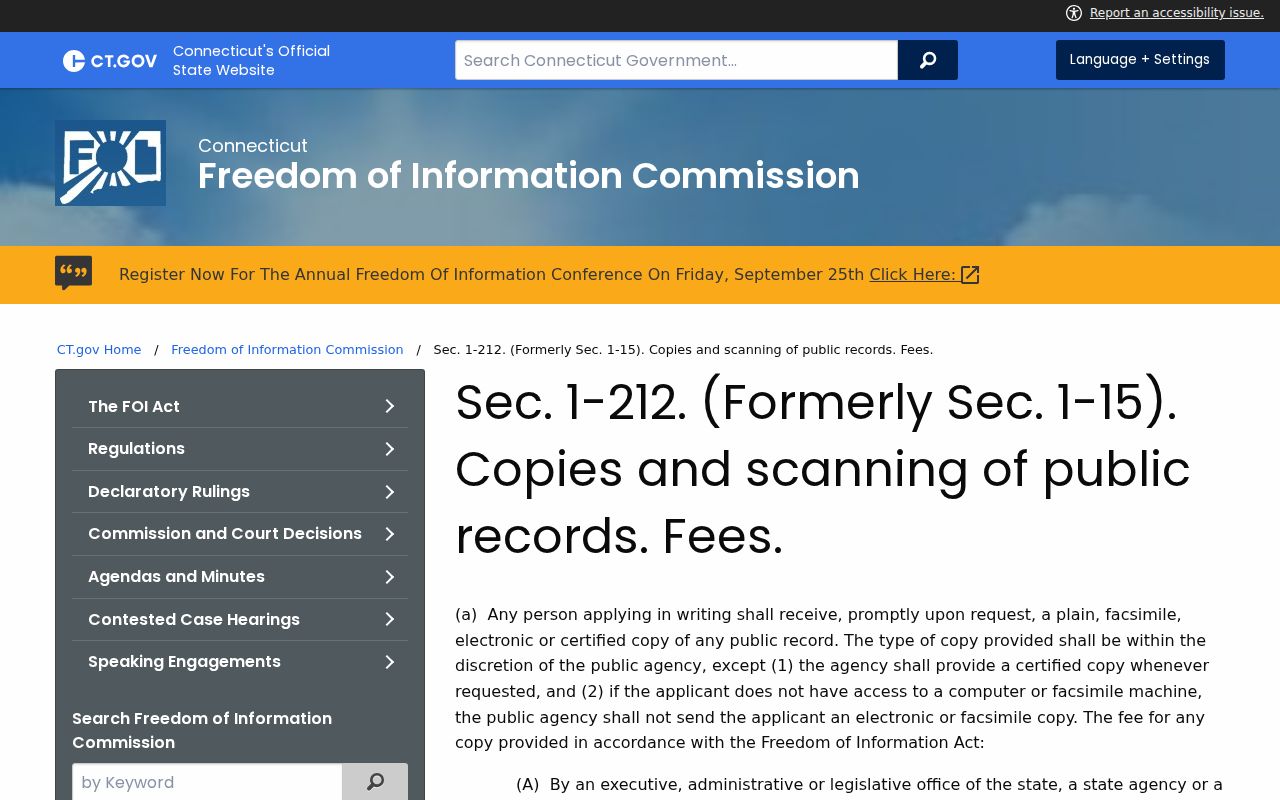
The fee guidance reinforces the final step: ask the custodian for the record and the format, rather than assuming an online result is the whole file.