
New Haven City Directories on Local Shelves
The first task is choosing the right collection. New Haven's volumes are chiefly Price & Lee and run from 1840 to about 1990. NHFPL describes complete microforms from 1840 through 1960, with bound books continuing from the 1880s into the late twentieth century. The Whitney Library adds a series from 1830 and a New Haven city directory run from 1840 through 1990 or 1993 in the Seton guide. Waterbury and Meriden fill gaps for other municipalities in the county.
| Collection | Years | Where Held | Access |
|---|---|---|---|
| New Haven city directories | 1840 to about 1990 | NHFPL Local History Room | Microform and bound books in library |
| New Haven historical series | 1830 and 1840 to 1990 or 1993 | Whitney Library | Appointment, manuscript and map support |
| Waterbury City Directory | 1868 to 1990 | Bronson Library | Near-complete physical run and selected PDFs |
| Meriden city directories | 1868 to 1992 | Meriden Room | Appointment, newspapers, maps, databases |
| County court and genealogy aids | Collection-specific | Connecticut State Library | Finding aids, reading room, archival copies |
These are city collections, not a single New Haven County city directory. A street in Milford, Meriden, or Waterbury needs the matching town volume or local history room. A New Haven volume can be excellent for New Haven addresses while saying nothing about a neighboring municipality.
The NHFPL Local History Room route supplies the municipal documents, maps, photos, microfilm, and research context behind the New Haven collection.
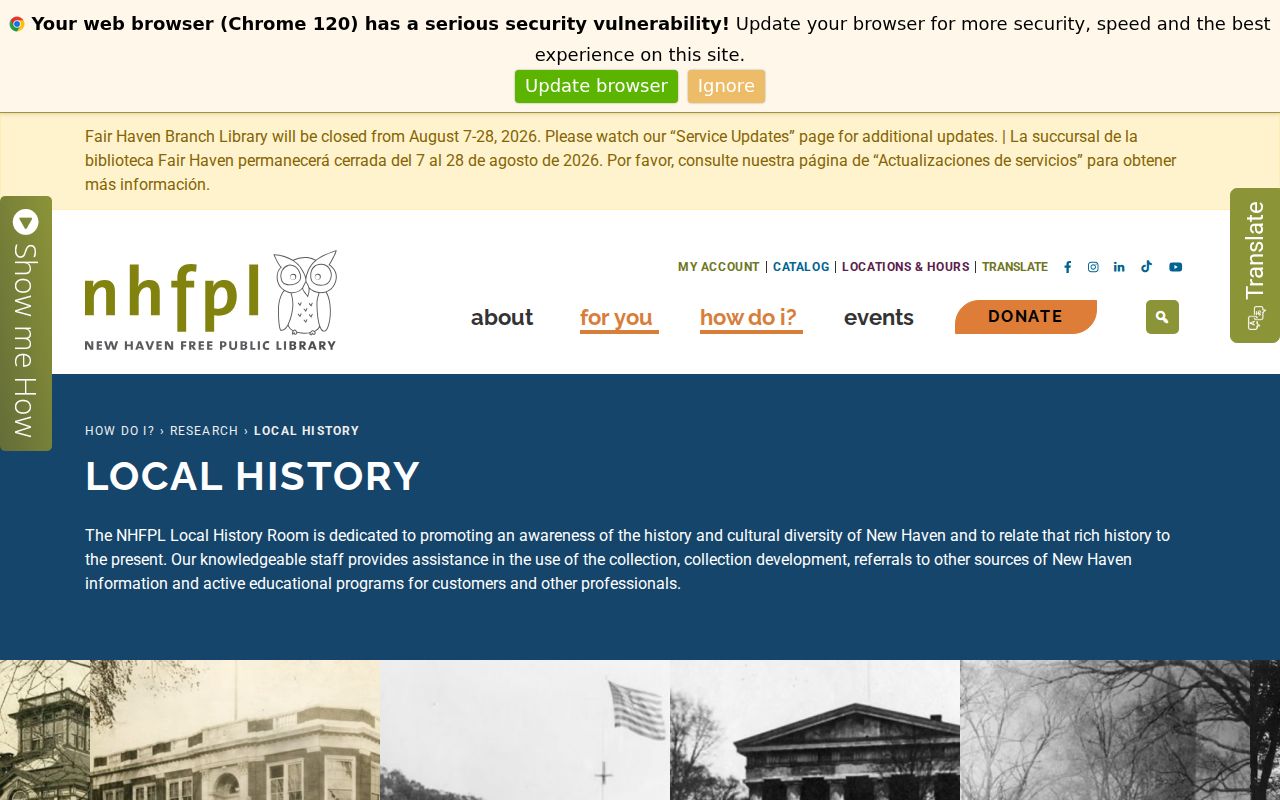
The library setting matters because many directory, newspaper, and map sources are available through in-library research rather than an open name-search database.
Price and Lee New Haven Directories
Most New Haven directories in the NHFPL run were produced by Price & Lee. A typical entry names the head of household, spouse, occupation, workplace, and work address. That pattern makes the city directory useful for tracing a person who changed work, moved within the city, or appeared in a business section. The entry's year and publisher matter because the same surname can occur in more than one household.
From about the 1920s, the back of the volume includes a reverse or address section. That is the key turn for a street question. Start with a known name when possible, record the address exactly, then search that address in the reverse section for other listed names. The reverse pages can uncover a spouse, boarder, business, or successor that a surname search misses, but they still follow the directory's own inclusion rules.
The NHFPL city-directory collection page explains the years, entry pattern, reverse section, and business section used in the local research.
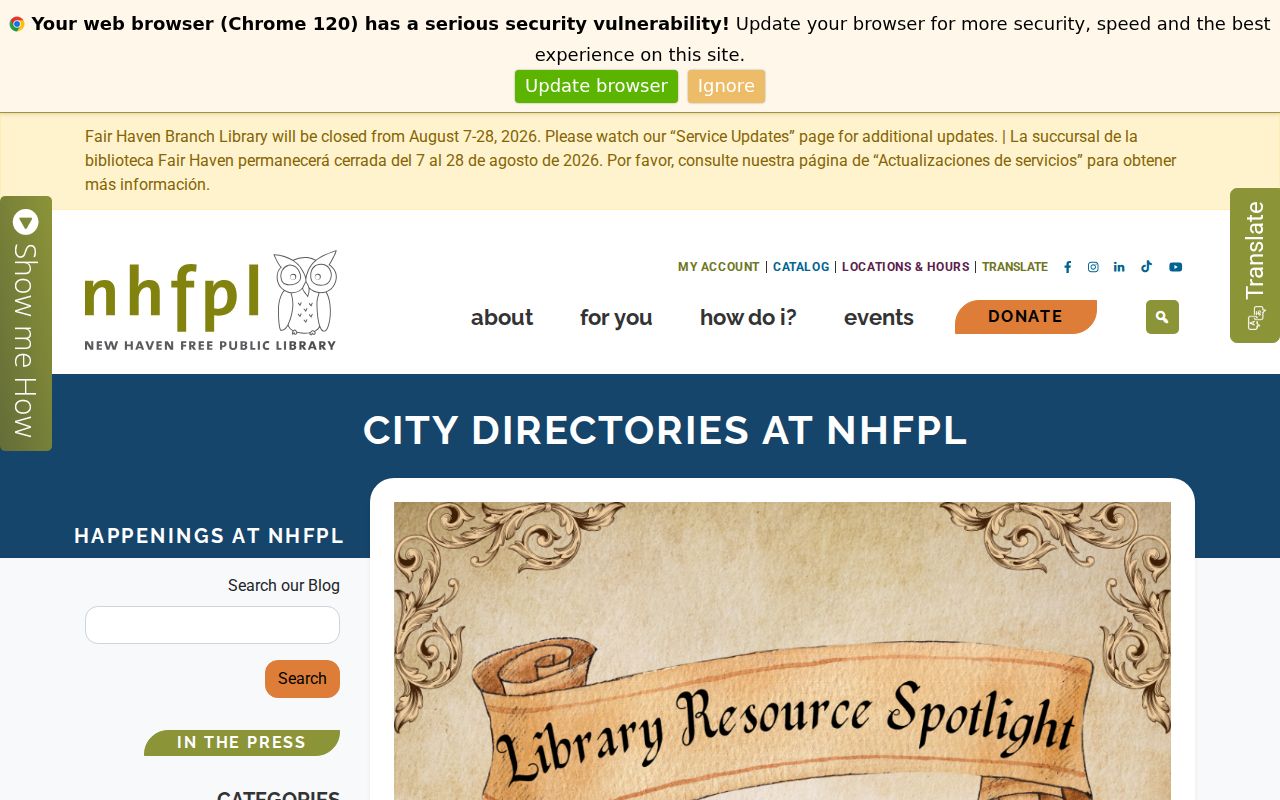
The collection view shows why a New Haven city directory search needs both an annual volume and a section choice.
Read a New Haven Directory Entry
A directory line is compact, so transcribe its parts before drawing a conclusion. Capture the name as printed, spouse or household note, occupation, work address, residence address, publisher, year, and any abbreviation. An entry can support a dated address lead or a work connection. It does not prove title to the building, a complete household, or a present location.
- Criss-cross directory
- A volume with a name section and a reverse address section, allowing a search to move in both directions.
- Householder entry
- The directory's chosen head-of-household convention, which may leave out other people at the address.
- Abbreviation key
- The publisher's explanation of occupation, relationship, address, or business shorthand.
- Business section
- A list of firms, owners or managers, business addresses, categories, and sometimes advertisements.
Waterbury's 1871 volume is a useful sample because it promises names and residences of every male citizen, a business directory, and a town sketch. That wording itself shows the period's scope and its exclusions. The 1881 scan uses residence, occupation, and office-hour details. Treat the sample as a historical record with a stated convention, not as a complete population count.
Reverse Pages in New Haven Directories
For a house-history question, reverse pages often do more work than a name section. Begin with a known street and number, check the closest directory year before and after the target date, and write down every printed name. Then return to the name section to see occupations, spouse notes, business ties, or a second address. If a number changes, keep the original and modern spellings side by side until a deed or map supports the conversion.
NHFPL's newspaper holdings make a useful companion. The New Haven Register runs from January 3, 1871 through 2019, while other local titles cover parts of the nineteenth and twentieth centuries. A newspaper can supply a death notice, business advertisement, marriage clue, or move that explains why a directory entry changes. A free, searchable official New Haven County obituary index was not located. NHFPL instead offers a paid lookup that needs a name, death date or window, residence town, requester contact, and payment.
Note: The reverse section is a finding aid for a date and address, not a guarantee that every person in the building was printed.
Waterbury Directories for New Haven Research
Waterbury's Bronson Library holds a near-complete Waterbury city directory run from 1868 to 1990. Selected public-domain PDFs include 1868-69, 1869, 1871, 1872, 1874, 1875-76, 1876, 1877, and 1881. Early volumes can include birth, death, or marriage notices, along with residence, occupation, and business material. Use them when the address lies in Waterbury, or as a cross-check for a person whose work or family ties connect New Haven and Waterbury.
The 1871 title page and interior pages are useful because they reveal the source's own structure.
Meriden's history and genealogy collection supplies the county cross-check route.
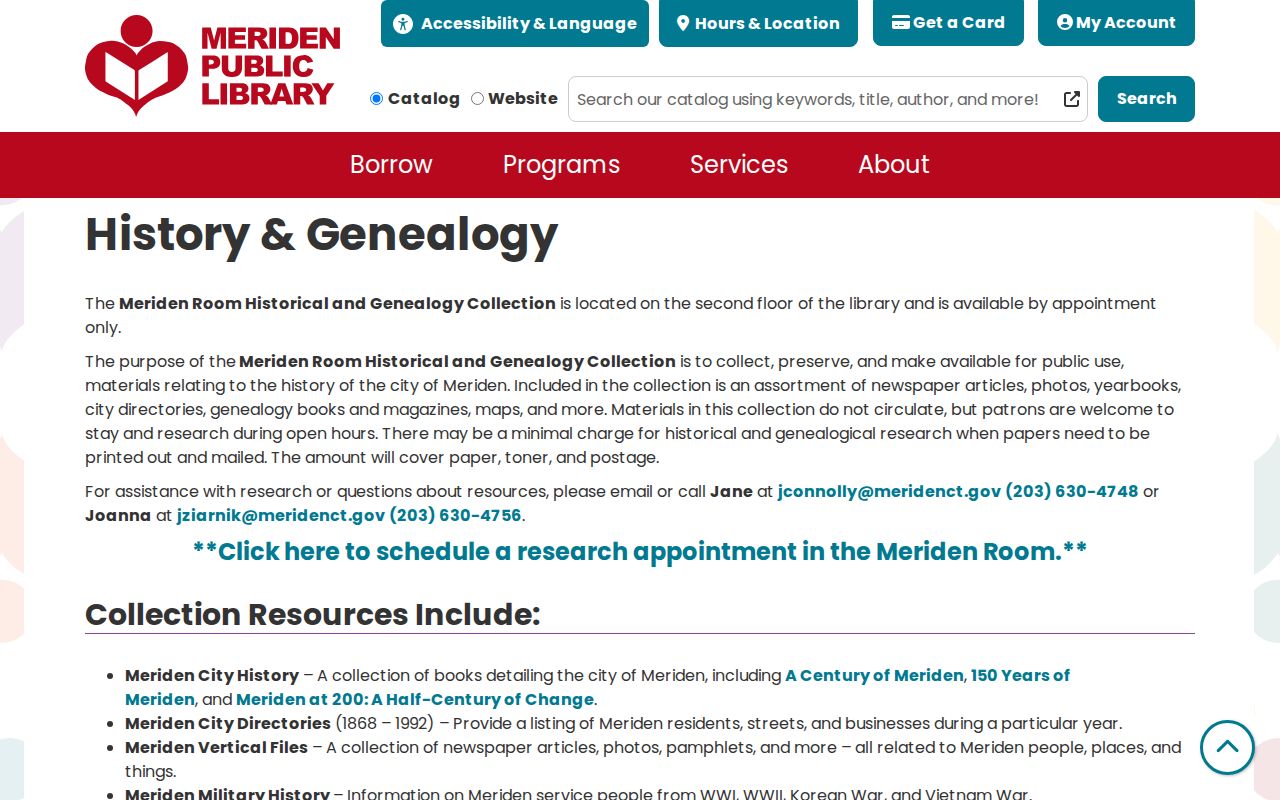
The county cross-check image represents the broader local-history shelf, where directories, newspapers, census material, and Sanborn maps meet.
Do not blend Waterbury names into a New Haven address without a dated reason. A directory entry from another city is a cross-town clue, not proof of residence in New Haven.
Meriden Directories Aid New Haven Research
The Meriden Room holds directories from 1868 to 1992 and pairs them with newspapers, Sanborn maps from 1884 to 1950, census material, yearbooks, and in-library research databases. The room requires an appointment. This makes Meriden valuable when a New Haven County family moved along the Quinnipiac corridor or when a name disappears from a New Haven volume and later appears in Meriden.
A good cross-check uses the same fields in both cities: name spelling, occupation, spouse or household note, address, and year. If a person appears only in a business section, label the address as work or office. If a newspaper gives a residence town, preserve that exact statement rather than converting it to a current parcel.
The city directory remains a historical collection tool. Current owner and parcel work belongs with the municipal assessor and clerk, while one-person verification can use the state court, Probate, voter, vital, or credential routes.
Whitney Library's New Haven Directories
The Whitney Library at the New Haven Museum adds a layer that ordinary directory pages do not. Its holdings include New Haven City and County manuscripts from 1648 to 1976, maps, photos, scrapbooks, newspapers, microfilm, and directory series. The Black New Haven Residents guide points researchers to Patten's New Haven Directory, Benham's City Directory and Annual Advertiser, selected male and female residents, work addresses, vital records, and church records.
The Whitney Library is appointment based, with 72 hours' advance notice, and publishes Wednesday through Friday and Saturday hours. Its house-history material specifically names directories, Sanborn maps, and the Arnold Dana Scrapbook as tools for tracing residents, builders, and changes. These collections can restore context around a household that a short annual entry leaves out.
The Yale Sanborn map-year table helps connect the city directory shelf to map evidence.
The map-year table helps choose a sheet that sits near the directory year rather than treating one map as a timeless picture of the block.
Trace a New Haven Household in Directories
A family-history search should move in small date steps. Choose a target year, then take the nearest directory volume before and after it. Match the address, not just the surname. Pair the volume with the nearest census, newspaper, map, deed, probate file, or vital event. When the evidence changes, record the change instead of smoothing it into one story.
- Write the exact town, street, number, unit, and alternate spelling for the target address.
- Find the closest New Haven directory year and search the name section.
- Check the reverse address section when the volume has one, especially for years from about the 1920s onward.
- Transcribe spouse, occupation, work address, publisher, and every household convention shown.
- Compare the result with census geography, a newspaper notice, a map sheet, a deed, or a probate or vital record.
- Mark the source as historical, current, uncertain, or protected, and keep the record date attached.
The federal census is open through 1950 under the 72-year release rule. Census enumeration lines do not match modern town and county boundaries automatically, so street, ward, household, and birthplace details matter. A directory gives an annual clue. The census gives a different snapshot.
When New Haven Directories Go Quiet
A missing directory line can mean a gap in the collection, a change in spelling, an address conversion, an omitted household member, a move between towns, or a year outside the run. It is not proof that the person was absent. NHFPL's obituary service is a request, not an instant index. Probate lookup data begins with key categories on January 5, 2011 and older coverage is incomplete. Court and vital records add their own access limits.
Use the State Library for finding aids to probate, naturalization, county court, census, cemetery, and genealogy material. Use the Whitney Library for manuscripts, maps, photos, and scrapbooks. Use the city clerk for a certified modern land record. Search the New Haven street directory by address when the question shifts to a current parcel or named road.
Lawful personal use. Historical directories support genealogy, local history, and family research. Do not turn a dated entry into a current location claim, and do not use public records to stalk, harass, intimidate, or harm anyone.
A careful city directory result names the volume, page or section, year, repository, and any gap. That detail lets another researcher repeat the search without mistaking a shelf lead for a certified fact.