
Finding Residents Across New Haven
New Haven County runs as twenty-seven separate municipalities rather than one records office. That matters for any resident lookup. A name in Waterbury, Milford, or Branford belongs to the town that holds the record. So start with the question the search must answer. An assessor card points to a parcel's current owner. A voter lookup confirms registration status in one town. A deed, by contrast, names the parties to a recorded transfer. Older links surface through probate files, vital records, newspapers, and city directory entries. For the wider frame, the Connecticut town-and-borough statute and the SOTS county population reference situate each municipality.
These distinctions keep a residents directory honest. An owner on the card is not always the occupant. A mailing address differs from a situs address. A former address is not where someone lives now. Write down the town, the name spelling, the year, the address type, and the exact question before searching any New Haven record.
- Identify the town or city before opening a local clerk, assessor, or registrar portal.
- Search the municipal assessor or GIS system by address, owner, account, MBLU, or PID when the parcel is known.
- Use the Connecticut voter lookup or local registrar for a current town and name check, while allowing for privacy suppression.
- Search the town clerk's deed or map index when a recorded transfer, lien, mortgage, or legal description matters.
- Move to the library, State Library, newspaper, directory, probate, or vital-record route for an older household or family link.
No online hit does not mean no record exists. Ask the actual custodian. Request the existing record, its date range, nonexempt fields, format, fee estimate, and certification requirement, invoking Connecticut's Freedom of Information Act where that law applies.
Where New Haven Keeps Resident Records
The phrase New Haven County can send a searcher to the wrong desk. Connecticut abolished county government in 1960. No county clerk or recorder exists. No county elections office or jail roster exists either. Each town or city clerk records its own local instruments and filings. Each municipality keeps its own assessor and registrar. State systems fill the gaps. The Judicial Branch runs public court searches, DPH offers a statewide vital-copy channel, SOTS maintains the central voter registry, and Probate works through districts rather than any county clerk.
New Haven City Clerk
200 Orange Street, Room 202
New Haven, CT 06510
203-946-8339
New Haven Assessor
165 Church Street
New Haven, CT 06510
203-946-4800
New Haven Registrars
Hall of Records, 200 Orange Street #201
New Haven, CT
203-946-8035
The New Haven City Clerk page anchors local searches. It is not a county substitute. Current copy and certification routes sit on the City Clerk forms and fees page. For any other municipality, the Secretary of the State's town clerk and registrar directory routes the request to the correct town office.
New Haven Starts With Town Clerks
New Haven's clerk records deeds, mortgages, releases, quitclaims, and liens. Maps, trade names, notary records, election filings, and local minutes round out the office's shelf. The city's SearchIQS route advertises guest access to an index and images. Certification still comes from the clerk. Land records run from about 1951 or 1952 onward. The vendor material gives a conflicting start date. Maps reach back to 1835, and trade-name filings carry their own index and image periods.
Every other town in the county keeps its own clerk and often its own vendor. Some use RecordHub. Vendor, start year, image access, and copy rules all differ. A New Haven deed hit is not a countywide result. A town missing from one vendor still keeps its records at the clerk's desk. Ask for a specific book, page, instrument, party, street, or legal description rather than a demand for every resident.
Connecticut's FOIA, CGS §§1-200 through 1-242, is one route. It reaches existing nonexempt records only. It cannot force a clerk to build lists. A precise request names the municipality, record category, address or parcel, date span, format, and certification need. Written denials generally follow a four-business-day rule. Fees and exemptions depend on the record and agency.
Note: A county label helps with orientation, but the municipal custodian controls the record, copy, fee, and certification path.
New Haven Parcel Owner Search
A New Haven parcel search starts with the municipal assessor, since no county roll exists. The VGSI screen accepts Address, Owner, Acct#, MBLU, PID, or All as query modes. MBLU splits into map, block, and lot fields. The result is reference data, not legal title. Read each field on its own. Situs address, mailing field, parcel ID, assessment date, sale history, legal description, and exemptions all deserve attention. Check each one separately.
| VGSI control | How it helps |
|---|---|
| Address | Finds a current situs record when the street and number are known. |
| Owner | Locates an owner name, but does not establish who occupies the parcel. |
| Acct# | Uses the municipal account identifier for a more exact return. |
| MBLU | Separates map, block, and lot components for parcel routing. |
| PID | Uses the parcel identifier that can bridge map and assessor data. |
| All | Searches the New Haven municipal system across its available modes. |
The assessor sets values against an October 1 assessment date. The last revaluation context dates to 2021. Assessments sit at 70% of fair market value. Mill rates shift by year. So match a rate to its date instead of treating any figure as permanent.
OPM and regional parcel data add a broader GIS layer over the county. Field completeness varies by town, though. Local assessor records remain the best anchor for any parcel owner lookup.
Note: A mailing address may belong to an out-of-town owner, trust, company, or representative and should never be relabeled as a household address.
Current New Haven Resident Sources
A New Haven residents directory works best as a coverage map. It is not a single list. Each record source has its own keeper, date range, and limit. The assessor works locally. Voter rolls run statewide but stay town based. Courts and Probate cross municipal lines. A license or business filing, however, usually points to a professional or entity tie rather than a home.
| Source | What It Lists | Keeper | Access |
|---|---|---|---|
| Grand List and assessor card | Owner, parcel, situs and mailing clues, assessment, exemptions, sales | Municipal assessor | Free VGSI reference and office route |
| Voter lookup | Current town registration, status, party, limited public fields | SOTS and local registrars | Free lookup, privacy limits |
| Deed and map index | Recorded transfer parties, liens, mortgages, legal descriptions | Municipal clerk | Vendor index, images, clerk copies |
| Judicial inquiry | Party, docket, property, legal-notice, and selected case details | Connecticut Judicial Branch | Free public summary, date limits |
| Credential or entity search | Professional status, business name, principal, agent, filing clues | DCP or SOTS | Free public portals, field limits |
Hunting one name? Use the resident lookup workflow with a town. Add a second identifier before trusting any match. For an address, keep the parcel and street fields intact, then follow the clerk or directory trail toward the current record. Commercial people-search sites look broader. They mix names with stale addresses, and they replace no town clerk, assessor, registrar, court, library, or state program.
New Haven's history route runs through NHFPL's Local History Room at Ives Library, where city directories, newspapers, maps, photos, municipal documents, and an obituary request service support older research. Community Management Teams add context but no member rolls. The same gap applies to staff, school, alumni, and association rosters. That absence is a source limit, not an invitation to infer one.
New Haven Voter Records, Carefully Read
Connecticut's voter lookup asks for a town, a last name, a first name or initial, and a date of birth. Exact result labels deserve a check in a normal browser. A current match confirms town registration and status. It proves no ownership, occupancy, or unbroken residence history. Blank results mislead, too. The cause may be a different town, inactive or removed status, a name variation, a protected record, or a portal limitation.
Public voter data carries a narrow birth field. The lookup match demands a fuller date than ordinary release allows. Public Act 26-1 §96 changed public release to year of birth, with month and day exempt. The Voter Registry Privacy Program lets a voter swear that disclosure creates danger. Safe at Home offers a separate substitute-address route. A public-facing record will say an address is protected or not displayed. It will not claim the person is absent.
Election records also run through the City Clerk. The fee schedule lists $1 per page for an absentee list, exemption report, or official checklist, $5 for a financial report, $25 for a citywide list, and $6 for voter-registration cards. Official results cost nothing. Confirm the schedule before ordering. The statewide CSV file is different. It requires a written $300 request with restricted purposes, so it is no casual neighborhood list.
For the official lookup and town contacts, the Secretary of the State voter information route is the reference point.
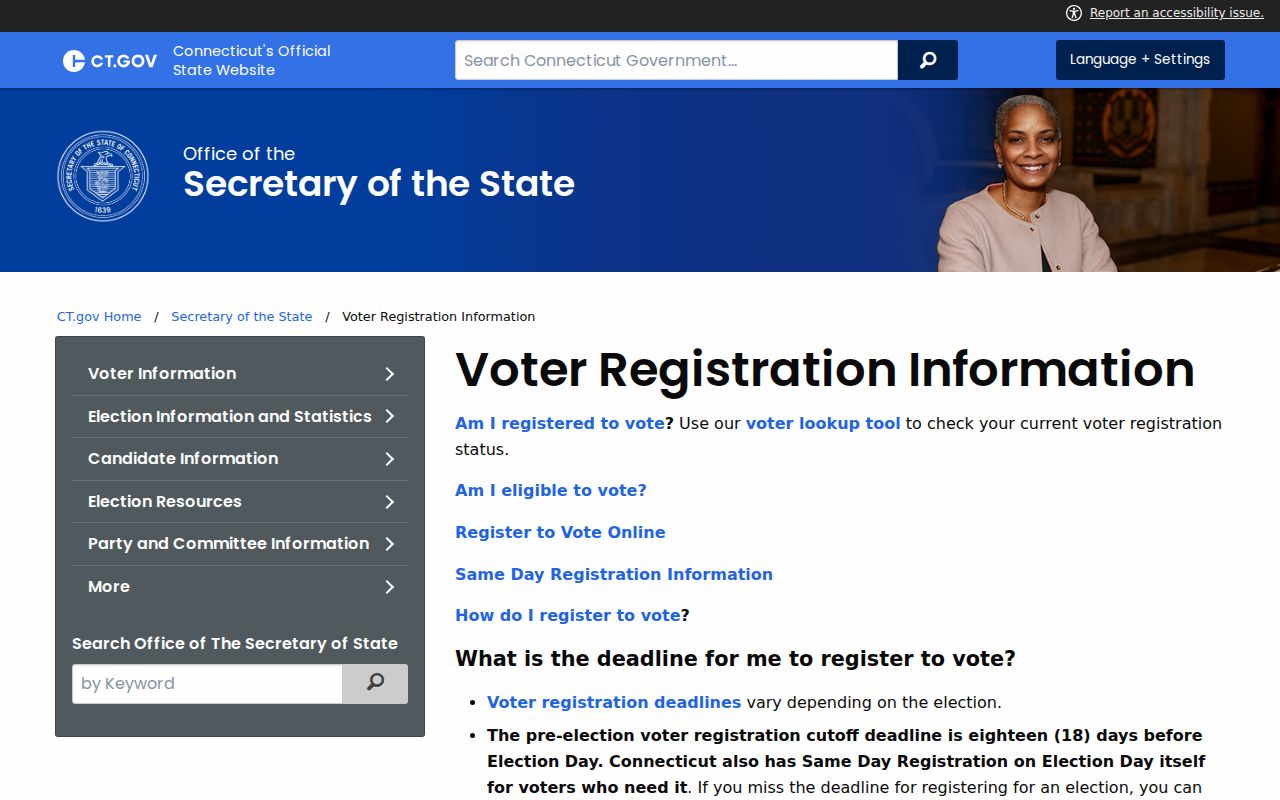
Voter status is one field, never a household roster.
New Haven Court and Probate Names
Expect no county court office. The Judicial Branch replaced it with a statewide system. Its party inquiry narrows by last name, first name, location, case category, case type, and sort order, plus Starts With, Contains, Is Equal To, or Sounds Like matching. Venue codes for New Haven, Meriden, Milford, Ansonia-Milford, and Waterbury surface there together. Every result is a public summary. It is no certified file. Older or protected matters may require a courthouse computer, a clerk request, or an archive route.
Probate keeps a separate case lookup for Decedent's Estate and Trusts. Fields include district, open or closed status, and both names. Results carry case number, name, type, and district. Key categories run from January 5, 2011 forward, and older coverage stays incomplete. A case number can lead to fiduciary contact information. The documents themselves are not generally open online, so ask the district clerk about access.
Legal-notice lists show a useful shape: party to be notified, case name, docket number, court location, notice start, and notice expiration. This separates court leads from residence claims. The courthouse sits at 121 Elm Street. Complete or certified material belongs with the New Haven Judicial District clerk, not a summary screen.
Note: A docket joins a name to a court event, while a parcel card joins a name to an assessment record; neither alone proves residence.
Connecticut Vital Records for New Haven
Vital certificates in Connecticut travel two routes. The event town's registrar keeps the local record. The state Department of Public Health covers records from July 1, 1897 forward. For a New Haven event, requests can go to the Bureau of Vital Statistics. Its address is 165 Church Street. DPH forms offer the statewide alternative. The state warns that a request can take up to 12 weeks. That delay makes the local route the practical first choice. Eligibility depends on the record type. Birth records under 100 years stay restricted. Once a birth record reaches 100 years, access broadens. Anyone 18 or older may request an ordinary certified marriage or death record. Protected sections and Social Security numbers remain limited. Fetal-death, adoption, parentage, and surrogacy records follow their own rules under CGS §§7-51 and 7-51a.
The DPH forms ask for event details and requester identity. They also want contact information, signature, relationship or eligibility, copy type, payment, and identification. Genealogy societies get broader access to old records. That access cannot be used to reach confidential adoption or parentage material. A certificate can confirm an event or relationship. But date it and match it with another record before using it to place a person at an address. The Connecticut vital-record overview separates the town and state routes and links current forms.
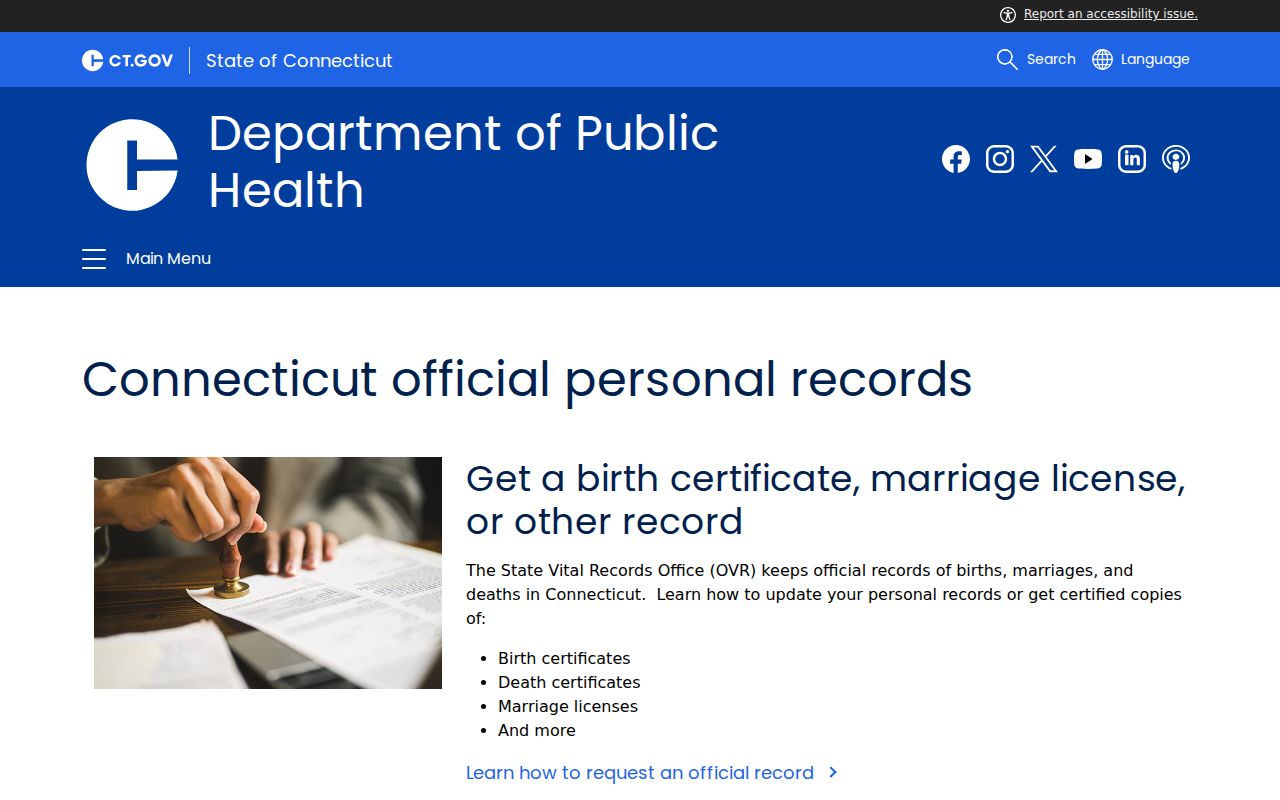
A certificate request is an eligibility process, not an open name search. The DPH overview draws that line clearly for New Haven requesters.
New Haven Credentials and Businesses
A professional license or a business filing can place a person in New Haven County records without listing a home. A credential address is not always a residence. The DCP eLicense portal takes many search fields. It accepts business name, first and last name, address, city, state, ZIP, country, credential number, license type, subcategory, and status. Visible status choices include Active, Pending, and Inactive. The deeper category menus load dynamically. Treat any listed address as mailing or practice information.
Business.CT.gov's SOTS registry search works from a business name, ALEI, or filing number. Results can connect an entity to principals, agents, filing dates, and annual-report PDFs. A New Haven trade name is a municipal clerk filing. Keep the entity search and the town record separate. A business connection can disambiguate a name, but a commercial address is still not a residence claim. The Connecticut Business Registry route marks the statewide search shell.
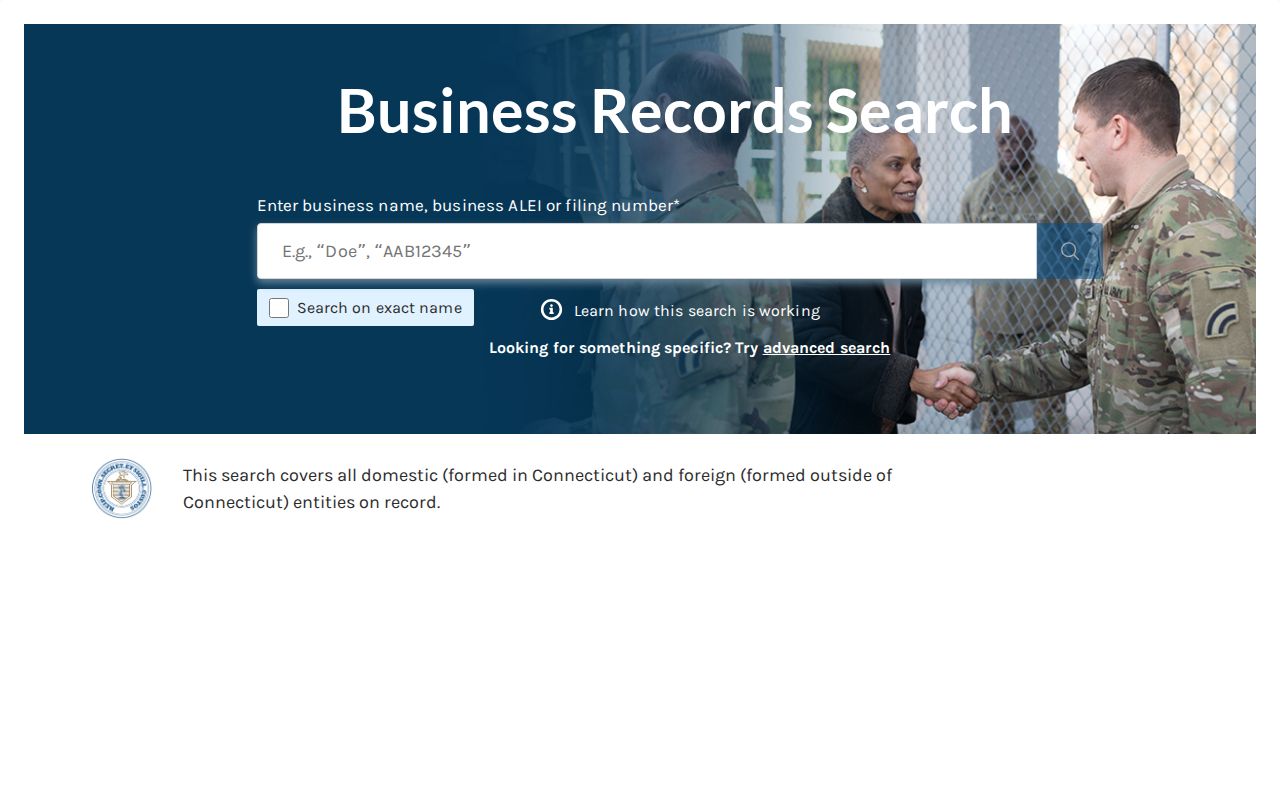
The registry page builds its filters with live JavaScript. Record the fields it actually displays instead of assuming every filter exists in the New Haven search.
New Haven ZIPs Are Postal Clues
A ZIP code narrows a mail address. It does not define New Haven County, a town, a parcel, or a household. The county's practical working set holds 41 geographic ZIPs. Station, PO-box, unique, and special codes sit alongside them. They appear in the Connecticut Association of Assessing Officers material. Whenever USPS returns a match, keep the fields separate: the returned ZIP, the post office or USPS city, the delivery type, the municipal town, and the county.
For address-by-address checks, the USPS address lookup is the right tool. USPS's City-State Product and AIS materials sort delivery into several types. These include street, rural, PO box, general delivery, unique, military, and non-active. AIS is a paid product. It updates monthly and restricts export from its viewer. The free lookup carries its own field labels and error messages. Consult the live USPS page for the current wording.
Then compare the postal result against the municipal assessor and GIS. A Woodbridge situs can carry a New Haven mailing label. A station code can masquerade as a land-area ZIP without being one. Postal geography works as a filter for a residents directory. It never serves as a final identity field.
Note: USPS controls delivery geography, while the municipality and clerk control parcel and land-record identity.
New Haven Custody and Safety Lists
New Haven County has no county jail roster. County-jail functions moved into the state correctional system in 1968. Current custody belongs with Connecticut DOC. The DOC search accepts an inmate number, last name, first name, and date of birth, with hints and reset controls. A result may show current location, status, admission, bond, controlling offense, sentence, release estimate, parole, or detainer fields. The feed updates regularly or nightly. Statutory and safety exclusions apply. The sex-offender registry is a separate public-safety source in Connecticut. Entries may show a last-known address, physical descriptors, and offense details. The registry itself warns that it is not a risk assessment and must not be used to conclude that a person is currently dangerous. A last-known address is not a current residence. Local police records must be requested from the municipality. No countywide incident index exists.
The Connecticut DOC inmate-search page is the official route, and the DOC locator with its management information guidance describes the current-feed boundary.
A custody entry is not a residence history. For registry context, the Connecticut sex-offender registry landing page explains the official disclaimer.
That notice belongs with any lawful personal research note.
New Haven Unclaimed Property Names
Connecticut's CTBigList holds names and last-known addresses for property the state has taken in. Heirs and family-history researchers find it useful. Businesses hand over assets after roughly three to five years of lost contact, per the Treasurer. The holdings range from accounts and checks to refunds, securities, insurance proceeds, and safe-deposit contents. Searching and claiming directly cost nothing. A match tells you the state received property under that name or address. It will not show where the person lives now.
Stick with the official state route and read the claimant instructions yourself. Skip any paid intermediary charging to search or claim. A CTBigList name can be checked against a probate case, a New Haven directory, or a vital record. Keep the dates and address types straight. The Connecticut Treasurer's unclaimed-property overview points to CTBigList as the source route.
Treat a state-held asset as a lead for reconnecting or estate research, not as a current-address directory.
New Haven Historical Resident Directories
The New Haven residents directory run at NHFPL is mostly Price & Lee. It spans 1840 to roughly 1990. Microforms cover 1840 through 1960 completely. Bound books pick up in the 1880s and run into the late twentieth century. A typical entry lists a head of household and a spouse. It also gives an occupation, a workplace, and a work address. The reverse address section starts around the 1920s. It is the key tool when your search begins with a street instead of a surname.
Neighboring collections deepen the shelf work. Waterbury's Bronson Library holds a near-complete 1868 to 1990 run plus selected digitized volumes. Meriden's collection runs 1868 to 1992. The Whitney Library adds series from 1830 and 1840 through 1990 or 1993. It also holds city and county manuscripts, maps, newspapers, and a targeted Black New Haven Residents guide. The State Library rounds things out with county court, probate, naturalization, census, and genealogy finding aids.
The New Haven city directories and historical collections page separates this shelf work from current parcel and voter records. A directory year is a historical lead, nothing more. Pair an entry with a newspaper, deed, map, census, probate file, or vital record. That is what confirms a household.
New Haven Records Need Two Sources
Verification is a habit, not a final flourish. Log the source, date, field type, and coverage boundary for every result you keep. A current assessor card plus a recorded deed supports an ownership chain. A directory entry and a newspaper support historical presence. A voter result and a parcel card can corroborate a town connection. Neither proves occupancy, though. And a probate result names a case and district, not a guaranteed current address.
- Roll
- A maintained list such as an assessment or voter record, with its own custodian and update cycle.
- Index
- A finding aid that points to a record; an index entry may not include the full image or certified copy.
- Parcel
- A mapped property unit identified by local fields such as parcel ID or MBLU, not a complete household list.
- Criss-cross directory
- A directory that supports both name-to-address and reverse address-to-name searching, often with omissions.
Lawful personal use. New Haven records are useful for family history, civic research, property curiosity, and reconnecting with people through proper channels. Do not use a public result to stalk, harass, intimidate, or harm anyone. A protected or missing field must stay missing.
Access rules shape what any New Haven records search can return. The Connecticut Freedom of Information Act matters here. So do municipal custodian rules and court access limits. DPH eligibility rules, Safe at Home, and the Voter Registry Privacy Program also shape what a residents directory can show. When a record is sealed, protected, offline, or outside a portal's date range, say so plainly. A source-dated chain with an open question beats a confident profile built from weak matches. Fee and copy questions have a clear answer. The Connecticut FOI copy-fee guidance covers the general state and municipal copy rules.
That fee guidance points to the final step. Ask the custodian for the record and the format you need, rather than assuming an online result is the whole file.